
Floating Point Adder
Power Efficient VLSI Design
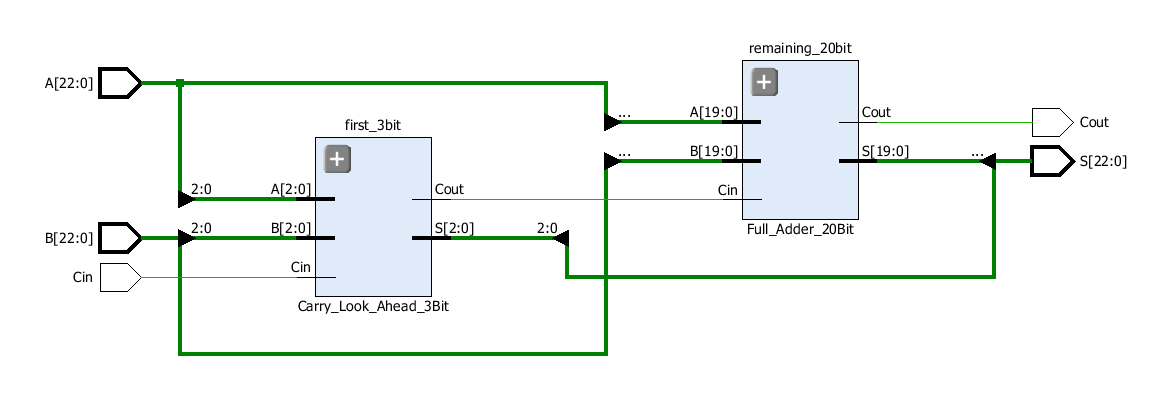
Optimizing mantissa addition in IEEE 754 single precision format using a hybrid RCA-CLA approach for reduced power and area.
Power Efficient
Area Optimized
Low Delay
Design Process
Step-by-step IEEE 754 implementation
Architecture & Results
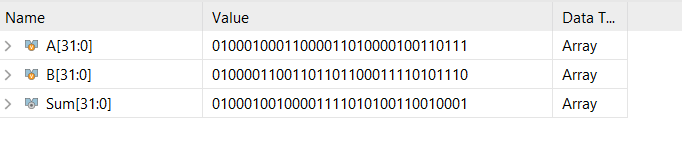
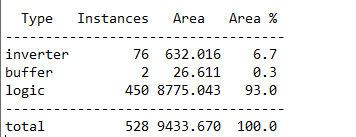
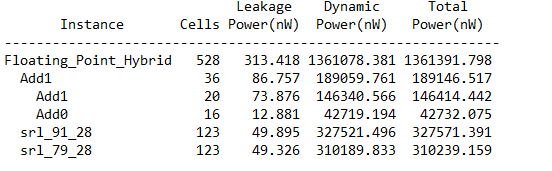
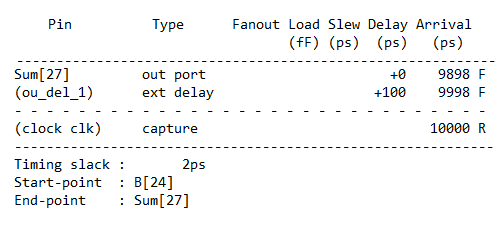
Block diagrams and performance analysis
Project Overview
Technical details and design methodology.
Hybrid RCA-CLA Design
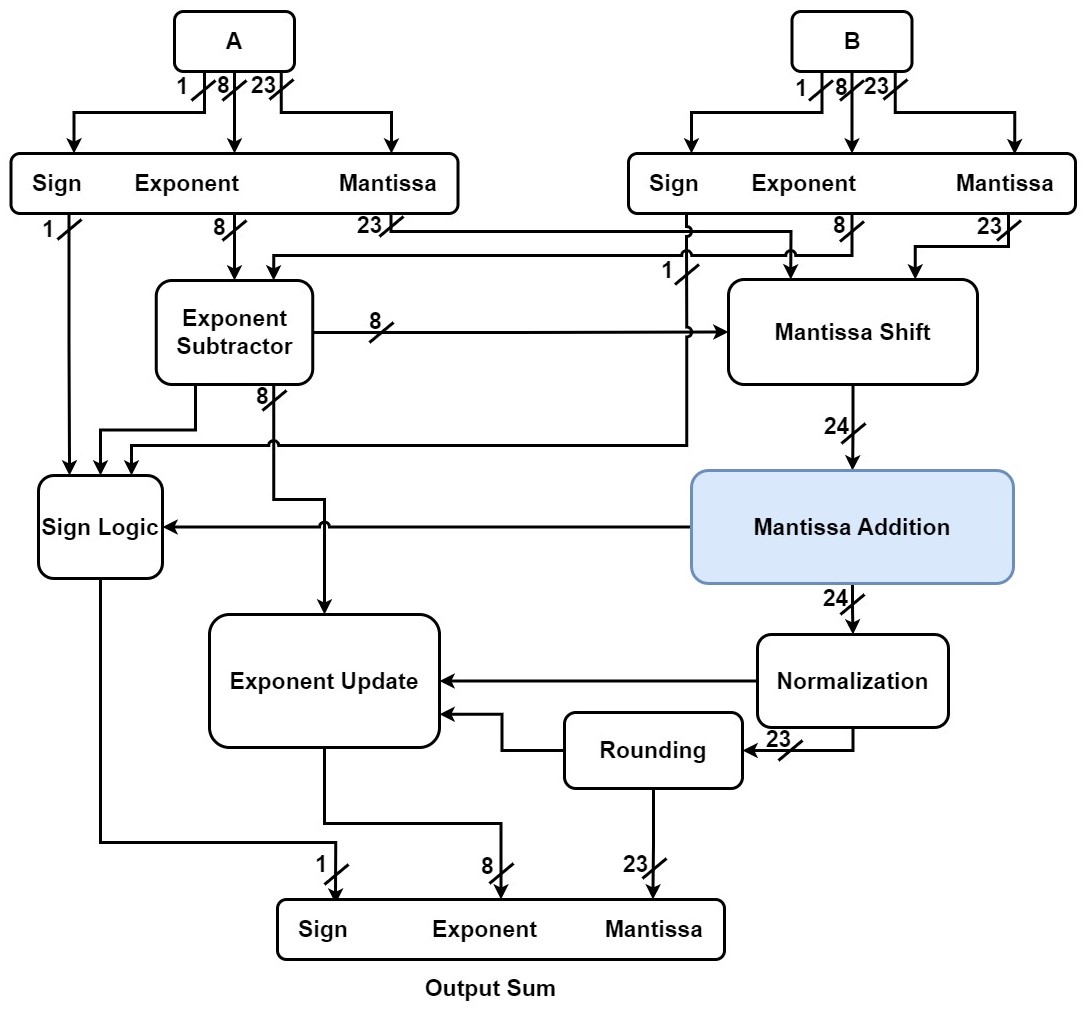
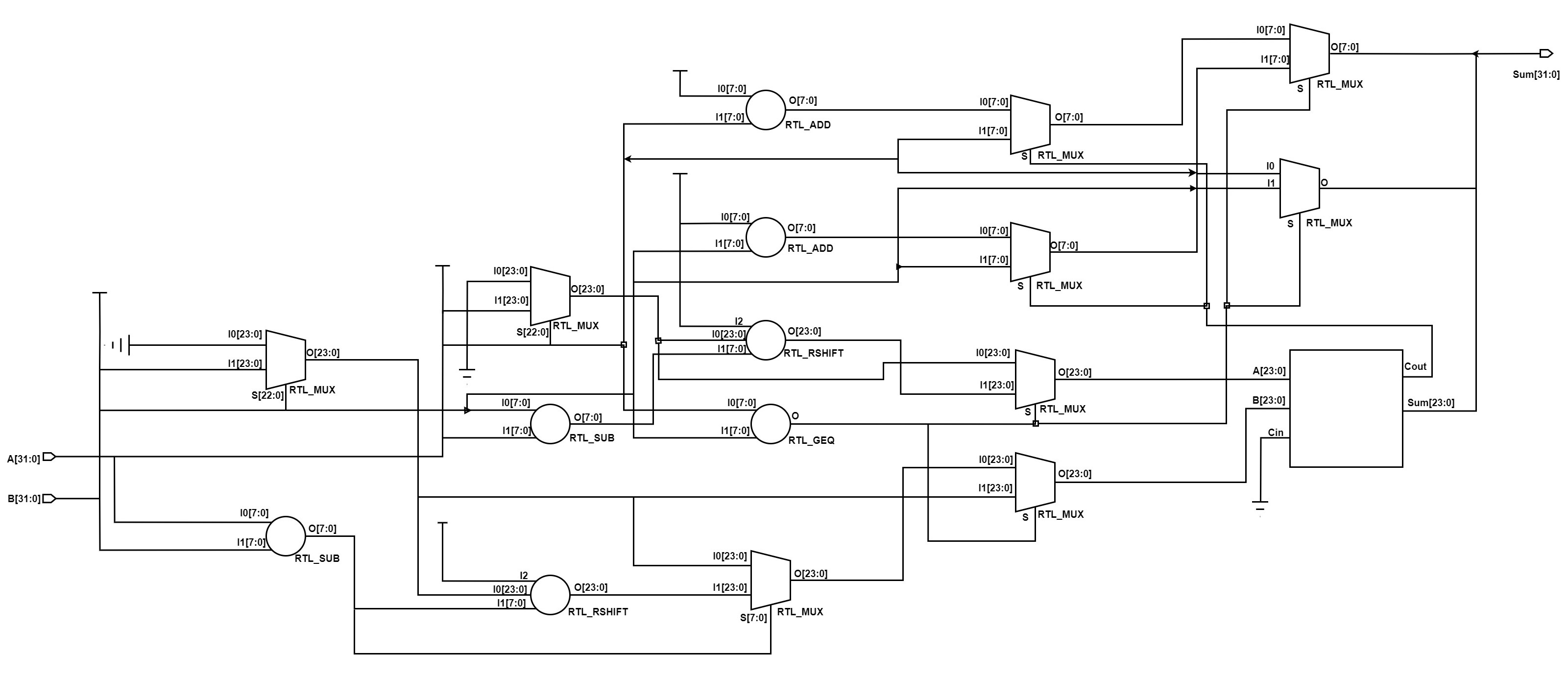
Floating-point addition is a critical operation in computer architecture but often incurs high costs in power, area, and delay. This project optimizes mantissa addition by implementing a hybrid approach that combines the simplicity of Ripple Carry Adders (RCA) with the speed of Carry Look-Ahead Adders (CLA). This hybrid design aims to balance performance and efficiency for Single Precision IEEE 754 floating-point operations.
Implementation Steps
- Decode IEEE 754: Extract sign, exponent, and mantissa; normalize mantissa with implicit bit.
- Align Exponents: Compare exponents and shift the smaller mantissa to align using a barrel shifter logic.
- Perform Addition: precise mantissa addition using the hybrid RCA-CLA adder handling sign and overflow.
- Normalize & Encode: Post-addition normalization, rounding, and re-encoding into standard IEEE 754 format.
Key Features
Project Info
- Category: VLSI Design
- Period: Aug 2022 - May 2023
- Project URL: GitHub Link